
(877) 786-1789

contact@paylessautoshippingservices.com

Open vs Enclosed Car Shipping Cost: Which Is More Expensive in 2026?

April 15, 2026

12 min(s) to read

open vs enclosed car shipping cost

Table of Contents

When booking vehicle transport, one of the biggest pricing decisions you’ll make is choosing between open vs enclosed car shipping.

Both methods safely transport vehicles across the country, but they differ significantly in price, protection, availability, and ideal use cases.

So how much more does enclosed shipping cost? And when is it worth paying extra?

In this guide, we’ll compare open vs enclosed car shipping cost, break down average pricing, and help you determine which transport option makes the most sense for your vehicle.

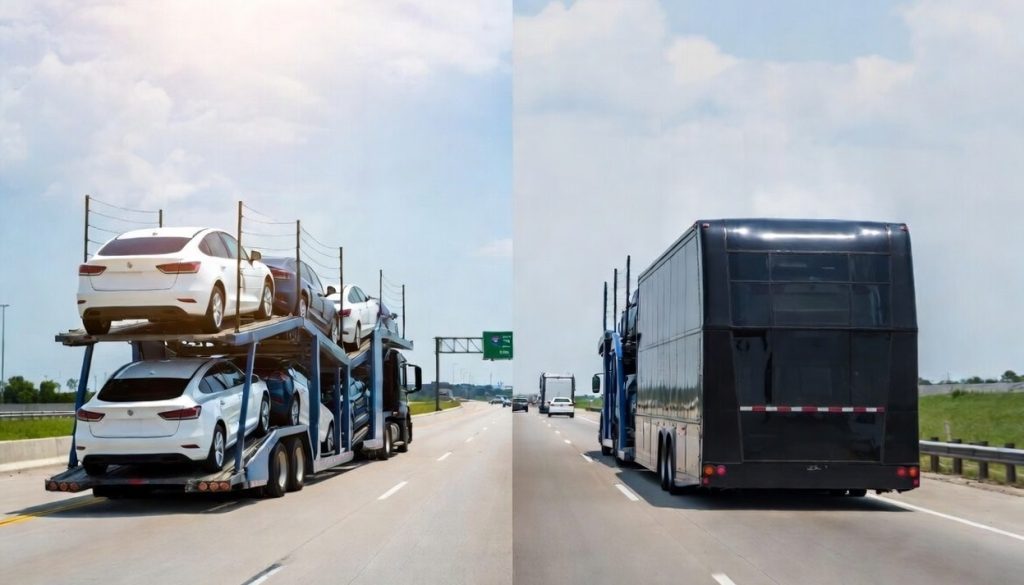
Open car shipping is the most common vehicle transport method in the United States.

Your car is loaded onto an open-air multi-car trailer, similar to the carriers used by dealerships.

Benefits of Open Transport

  • Most affordable shipping option
  • Widely available nationwide
  • Faster scheduling due to more carriers
  • Safe for most standard vehicles

Open transport is used for the vast majority of everyday vehicles shipped across the country.

Enclosed car shipping transports your vehicle inside a fully covered trailer.

This protects the vehicle from:

  • Rain and snow
  • Road debris
  • Dust and dirt
  • Sun exposure
  • Extra visibility/security concerns

Enclosed transport is generally reserved for high-value or specialty vehicles.

Below is a general pricing comparison for 2026:

DistanceOpen TransportEnclosed Transport
0–500 miles$500–$900$800–$1,300
500–1,000 miles$700–$1,100$1,100–$1,700
1,000–1,500 miles$900–$1,400$1,400–$2,200
1,500–2,500+ miles$1,100–$1,800$1,800–$3,000+

Enclosed shipping typically costs 30% to 60% more than open transport.

There are several reasons enclosed car shipping is more expensive.

1. Fewer Vehicles Per Trailer

Open carriers often transport 7–10 vehicles at once.

Enclosed trailers usually carry 2–6 vehicles, reducing carrier revenue per trip.

2. Higher Insurance Coverage

Enclosed shipments often include increased insurance limits for high-value vehicles.

3. Specialized Equipment

Enclosed trailers require:

  • More expensive equipment
  • Lift gates/ramps for low-clearance vehicles
  • Enhanced loading procedures

4. Lower Carrier Availability

There are significantly fewer enclosed carriers than open carriers nationwide.

Lower supply means higher pricing.

Open transport is ideal for most customers shipping:

  • Daily driver vehicles
  • Standard sedans
  • SUVs
  • Pickup trucks
  • Leased vehicles
  • Budget-conscious shipments

If your vehicle is replaceable and doesn’t require premium protection, open shipping is usually the best value.

Enclosed transport is recommended for:

  • Luxury vehicles
  • Exotic/supercars
  • Classic cars
  • Collector vehicles
  • Antique automobiles
  • Custom modified vehicles
  • Low-clearance sports cars

If your vehicle’s value or sensitivity justifies extra protection, enclosed transport can be worth the premium.

Yes—open car shipping is considered very safe.

Despite being exposed to weather and road conditions:

  • Millions of vehicles are shipped this way annually
  • Professional carriers use secure tie-down systems
  • Damage claims are relatively uncommon

Most customers shipping everyday vehicles choose open transport without issue.

Not necessarily. While enclosed transport offers more protection, it may not provide enough added value for standard vehicles.

For example:

Paying an extra $700–$1,200 to protect a standard commuter car may not make financial sense.

Scenario:

Shipping a 2024 Honda Accord from California to Texas

Transport TypeEstimated Price
Open Carrier$950
Enclosed Carrier$1,550

Difference: $600

For a standard sedan, many customers prefer to save the money and use open transport.

Regardless of open or enclosed, final cost still depends on:

  • Distance
  • Vehicle size
  • Route popularity
  • Season
  • Pickup/drop-off location
  • Vehicle operability
  • Scheduling flexibility

Ask yourself:

Is the vehicle high-value?

If yes → Consider enclosed.

Is the vehicle rare or collectible?

If yes → Consider enclosed.

Is the vehicle modified or low-clearance?

If yes → Enclosed may be safer.

Is budget your top priority?

If yes → Open is better.

If you need enclosed transport but want to reduce cost:

  • Book early
  • Be flexible with dates
  • Ship during off-peak season
  • Choose terminal pickup/drop-off if available
  • Compare multiple enclosed carrier quotes

When comparing open vs enclosed car shipping cost, the main difference is that:

Enclosed transport generally costs 30–60% more than open shipping.

For most everyday vehicles, open transport offers the best value and remains the industry standard.

However, for luxury, classic, exotic, or high-value vehicles, the extra cost of enclosed shipping may be well worth the added protection.

The right choice depends on your vehicle, budget, and risk tolerance.

Need an exact quote?
Use our Car Shipping Calculator to compare open and enclosed transport pricing based on your route and vehicle.

Related Articles

No more posts to show

Free Auto Shipping Cost Calculator