(877) 786-1789

contact@paylessautoshippingservices.com

Stop Chasing the Lowest Quote: 8 Smarter Ways to Save on Auto Transport

Posted On : 06/26/2026

3 min(s) to read

Table of Contents

Here’s the uncomfortable truth: the customer who gets the lowest car shipping quote is rarely the one who pays the least.

Ultra-low quotes attract carriers who don’t show up, brokers who upsell at the last minute, and shipments that sit waiting for weeks. The real savings in auto transport don’t come from finding the cheapest quote. They come from knowing when to book, how to ask, and what to avoid.

The #1 Myth About Saving Money on Car Shipping

Most people treat auto transport like they’re buying a product on Amazon — find the lowest price, click buy, done. But auto transport is a service marketplace, not a fixed-price product.

The lowest quote on a load board is the one no carrier wants to take. It sits. Days pass. The broker calls and says they need to raise the price to “find a carrier.” Now you’re paying more than if you’d booked a fair market price from the start — and you’ve lost a week.

The real goal isn’t the lowest quote. It’s the lowest total cost. Those are two very different things — and the strategies below target the second one.

8 Strategies That Actually Lower Your Price

1. Book in the Off-Season Save $100 – $300

Summer (June–August) is peak moving season. Demand spikes, prices follow. If your move is flexible, shifting your ship date to September–October or February–April can save you $100–$300 on the same route.

It’s the single biggest lever you have — and it costs you nothing except a little timing flexibility.

✅ Action: If you’re moving in July or August, ask yourself — can I ship the car 3–4 weeks earlier or later? Even a 2-week shift out of peak season can make a meaningful difference.
2. Be Flexible on Your Pickup Window Save $50 – $150

Customers who demand a specific pickup date pay a premium for that certainty. Carriers have to reroute or hold a spot specifically for you — and that costs money.

Give brokers a 3–5 day pickup window instead of a single date. More flexibility = more carriers can fit your load into their existing route = better rates and faster dispatch.

✅ Action: When booking, tell the broker: “I’m flexible on pickup — anytime between [date] and [date+5 days] works for me.” Watch how quickly the quote improves.
3. Book Early — Not Last Minute Save $75 – $200

Last-minute bookings (under 5 days) almost always carry a premium. Carriers are already committed to their routes and squeezing in your load requires extra compensation.

Booking 7–14 days ahead gives brokers time to find the right carrier at a fair rate — without the urgency premium baked in.

✅ Action: Get your quote as soon as you know your move dates — even if they’re 3–4 weeks away. Lock in today’s rate before it changes.
4. Ship in the Less Popular Direction Save $150 – $400

Auto transport pricing is heavily influenced by directional imbalance. When more cars move in one direction, the return leg is cheaper because carriers need to fill empty spots on the way back.

Florida to New York in November? Cheap — carriers are heading north with empty space. New York to Florida in November? Expensive — everyone’s going that direction.

✅ Action: Before you book, check what season it is for your specific route. If you’re going against the flow of traffic, you’ll get a significantly better rate.
5. Choose Open Transport Over Enclosed Save $200 – $600

Enclosed transport costs 30–50% more than open transport. For standard vehicles — sedans, SUVs, trucks — open transport is perfectly safe and used by the vast majority of customers.

Unless you’re shipping a classic car, luxury vehicle, or exotic, enclosed transport is an upgrade you probably don’t need to pay for.

✅ Action: Is your car a daily driver worth under $50,000? Choose open transport. Save the enclosed premium for vehicles that genuinely need the extra protection.
6. Get 3 Quotes — Then Call the Best One Save $50 – $150

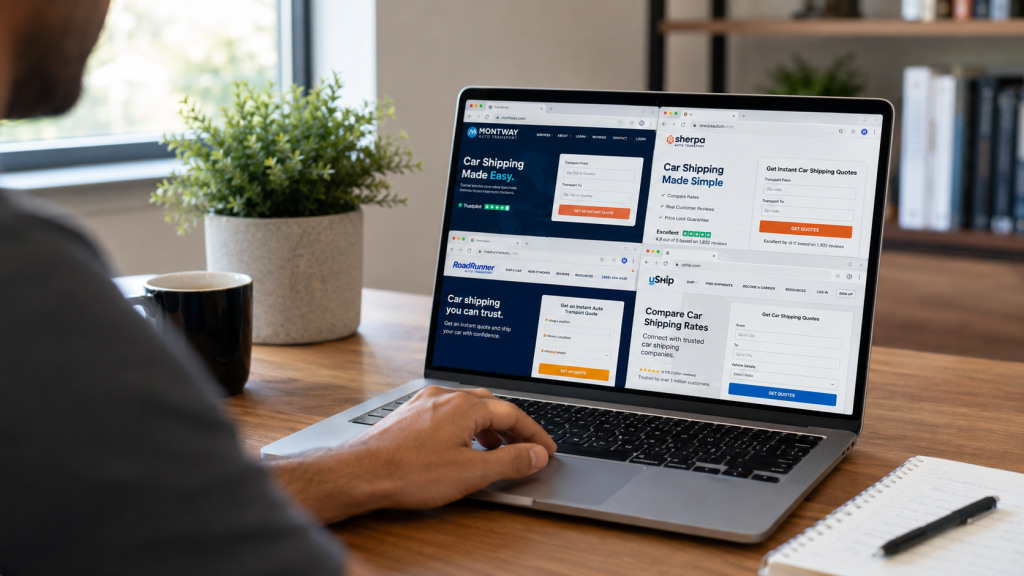
Getting multiple quotes does two things: it tells you what the market rate actually is, and it gives you a credible basis for negotiation. Most customers either get one quote and book, or get ten quotes and get overwhelmed.

Three is the sweet spot. Get three realistic quotes from reputable brokers, identify the best combination of price and reviews, then call — not email — to ask if they can do better.

✅ Action: Get 3 quotes from brokers with strong reviews. Take the best price to the broker with the best reputation and ask if they can match it.
7. Post Your Load on a Tuesday or Wednesday Save $50 – $100

Carriers plan their weekly routes Monday through Wednesday. Loads posted early in the week get more carrier attention — more competition for your load means carriers accept lower rates to win it.

Loads posted Thursday or Friday sit over the weekend. Fewer takers, more urgency, higher cost to dispatch.

✅ Action: Aim to confirm and post your load on a Monday, Tuesday, or Wednesday morning for the best carrier response rate.
8. Keep Your Car in Running Condition Save $100 – $300

Non-running vehicles require a winch-equipped carrier for loading — a specialized truck that not every carrier has. Fewer eligible carriers means less competition and higher rates.

If your car has a minor issue preventing it from running, fixing it before shipping day can save you $100–$300 in inoperable vehicle surcharges — and gets you a faster pickup.

✅ Action: Before booking, confirm your car starts, rolls, and brakes. If it doesn’t, disclose it upfront so the broker can price it correctly from the start.

Ready to See What Your Route Actually Costs?

Get a transparent, no-hidden-fee quote in minutes. We’ll tell you exactly what you’re paying — and why.

(877) 786-1789

contact@paylessautoshippingservices.com

The Negotiation Script — Exact Words That Work

Use This When Calling a Broker:

After getting a quote, call back and say:

“I’ve got a quote from you for [price]. I have a competing quote for [lower price] from another broker. I’d prefer to work with you based on your reviews — is there any flexibility on the rate if I book today?”

If they can’t match it, ask:

“If I give you a 5-day pickup window instead of a fixed date — would that bring the price down at all?”

If they still can’t move, ask:

“What’s the best time of year to ship this route? I’m flexible by a few weeks if the savings are meaningful.”

Note: This works best in fall and winter seasons. In peak summer, brokers have less room to negotiate because demand is already high.

The Price vs. Risk Matrix

Not all “cheap” quotes carry the same risk. Here’s how to read a quote’s risk level before you book:

Quote TypePrice vs MarketRisk LevelWhat Likely Happens
20%+ below marketDangerously lowVery HighNo carrier accepts — upsell call in 5–7 days
10–20% below marketToo low HighDelayed pickup, possible price increase
0–10% below marketCompetitive LowCarrier assigned within 1–3 days, no surprises
At market rateFair Very LowFast pickup, reliable delivery, fixed price
10%+ above marketOverpriced NoneYou’re overpaying — negotiate or find another broker

Smart Shopper vs. Price Chaser — The Real Cost

The Price Chaser

  • Books the lowest quote — $650 vs market $850

  • Waits 10 days — no carrier assigned

  • Gets upsell call — price raised to $950

  • Agrees (car needs to move)

  • Pays cash only at delivery

  • Final cost: $950 + stress + 10 days lost

The Smart Shopper

  • Books at fair market rate — $850

  • Carrier assigned within 2 days

  • Flexible pickup window saves $75

  • Booked in October — off-peak saves $100

  • Pays by card, no surprises at delivery

  • Final cost: $675 + zero stress

The result: The smart shopper paid $275 less than the price chaser — and got their car 10 days faster. The difference wasn’t the quote. It was the strategy.

Before You Book — 5-Point Checklist

Run Through This Before Paying Any Deposit

  • Is the quote within 10% of other quotes you’ve received? If it’s dramatically lower, it’s too good to be true.

  • Is the price fixed — not an estimate? Get written confirmation before paying a deposit.

  • Have you given a flexible pickup window? A 3–5 day range instead of a fixed date saves money and speeds up dispatch.

  • Is the broker FMCSA-licensed? Verify their MC number at safer.fmcsa.dot.gov before booking.

  • Have you checked their reviews? Google, Transport Reviews, and BBB are the three most reliable sources. Look for consistent patterns, not just star ratings.

The best price on auto transport isn’t found — it’s engineered. Use the right timing, the right flexibility, and the right broker, and you’ll consistently pay less than the customer who just grabbed the lowest number on screen.

Ready to See What Your Route Actually Costs?

Get a transparent, no-hidden-fee quote in minutes. We’ll tell you exactly what you’re paying — and why.

(877) 786-1789

contact@paylessautoshippingservices.com

Related Articles

Get Your Free Auto Shipping Quote

Nationwide door-to-door auto transport • Fully insured • No hidden fees

Free Auto Shipping Cost Calculator

Free Local & Long-Distance Move Cost Estimator

Free Auto Shipping Cost Calculator